
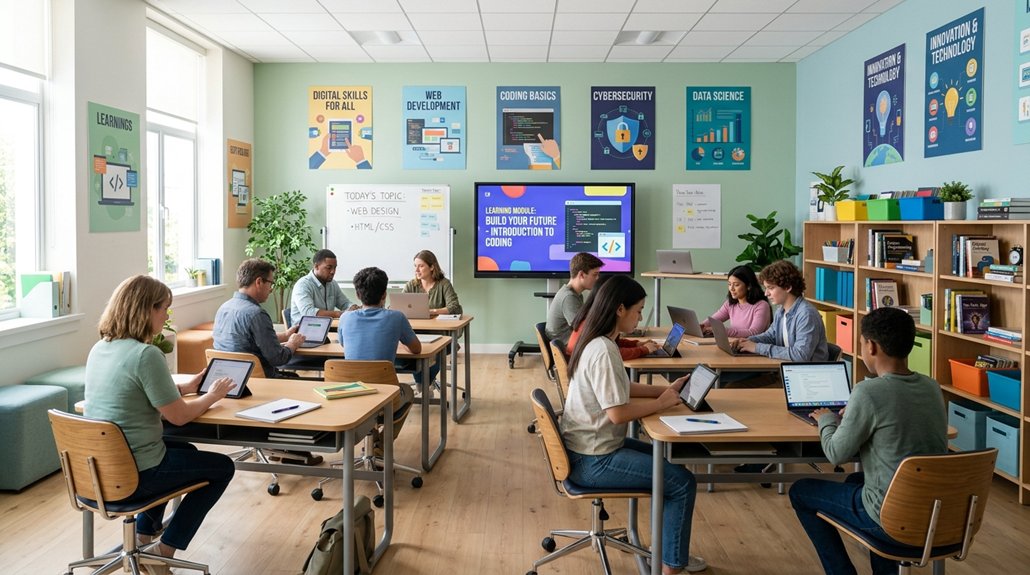
Learning New Skills Through Technology and Education
You can learn new skills more effectively through technology and education. Personalized learning experiences adapt to your needs, using real-time data to improve your progress. Gamification keeps things engaging, turning skill acquisition into a fun challenge. Interactive tools and instant feedback help reinforce what you’ve learned while collaborative environments enhance critical thinking. As teaching evolves, you’ll gain essential digital literacy skills, preparing you for the future. Discover how these advances can transform your learning journey.
Key Takeaways
- Technology personalizes learning, adapting to individual strengths and weaknesses, enhancing skill acquisition efficiently.
- Gamification engages learners with interactive elements, making skill development enjoyable and motivating.
- Instant feedback from digital tools reinforces learning, corrects mistakes, and promotes continuous growth.
- Collaborative learning environments encourage peer interactions, refining communication skills and critical thinking.
- Digital literacy skills are essential for navigating technology, fostering responsible information evaluation and ethical online behavior.
The Role of Technology in Personalized Learning
In today’s educational landscape, technology plays a pivotal role in personalizing learning experiences for students. With real-time data and feedback, you can instantly identify where your students thrive or struggle. This immediate insight lets you adjust lesson pacing and materials, ensuring every learner gets the support they need. Additionally, AI-driven analytics can help educators further refine their teaching strategies based on student performance data.
Adaptive curriculum tools allow you to customize lessons effortlessly, catering to diverse abilities without disrupting class flow. By automating grading and assessments, you free up valuable time to focus on individualized attention. Furthermore, many schools implementing personalized learning have seen up to a 50% reduction in achievement gaps, highlighting the effectiveness of these tailored approaches.
Additionally, technology fosters student agency, empowering them to take charge of their learning. By leveraging these tools, you can create a more inclusive environment that truly addresses each student’s unique needs and strengths.
Gamification’s Role in Skill Acquisition
While many traditional teaching methods can struggle to engage today’s learners, gamification effectively transforms skill acquisition into an exciting journey. By incorporating elements like badges, points, and leaderboards, you’ll find motivation soaring as you tackle new challenges. Competitive aspects not only boost your commitment but also make learning enjoyable. Think about how Duolingo uses trophies to keep you moving forward in language learning—it’s all about rewarding your progress. Interactive games provide instant feedback, ensuring you stay engaged and correct mistakes on the spot. Plus, with gamified simulations, you can hone practical skills in a risk-free environment. Ultimately, gamification fosters a culture of continuous learning, empowering you to set goals and master new abilities while serving others effectively. This is crucial because constant learning is essential for adapting to the ever-evolving demands of the workplace. Incorporating social interaction helps create a supportive environment that enhances the overall learning experience.
Leveraging Visual and Interactive Tools for Learning
Gamification has already shown how engagement can transform learning, and now it’s time to explore how visual and interactive tools can further enhance this experience.
Using mind maps and graphic organizers, you can simplify complex information, making it easier for your learners to grasp and remember. Sketchnotes and diagrams actively engage students, helping them process content effectively. Incorporating visual thinking strategies can significantly support understanding and retention of information.
Tools like Canva and Miro enable real-time collaboration, fostering teamwork and creativity. Interactive video platforms like Edpuzzle and Flipgrid encourage peer interaction, making learning dynamic.
Finally, multimedia engagement tools like Animoto and BrainPOP reinforce concepts through engaging visuals. By incorporating these tools, you not only enhance understanding but also empower others to thrive in their learning journeys.
Why Instant Feedback Matters for Skill Development
Instant feedback acts as a catalyst for skill development, ensuring learners grasp concepts effectively and make timely adjustments. When you receive immediate input, you strengthen neural pathways, connecting your actions directly to results. This real-time guidance helps you avoid reinforcing mistakes, which can become hard habits to break. Research shows that instant feedback enhances learning outcomes, keeping you engaged and motivated. You’ll feel a sense of competence, driving you to continue improving. Additionally, real-time feedback fosters a culture of ongoing reflection, which is essential for continuous growth and skill enhancement.
With regular feedback, you also develop stronger self-assessment skills, enabling you to evaluate your progress autonomously. Embracing this approach allows you to refine your skills rapidly, making your learning journey not only effective but also deeply rewarding, ultimately benefiting those you aim to serve.
Expanding Access to Learning Resources Online
As technology continues to evolve, access to learning resources online has expanded dramatically, opening doors for countless learners worldwide.
With online education, you gain flexibility that traditional institutions often lack. The rise of MOOCs has democratized learning, breaking down barriers related to gender and socioeconomic status. High-quality online programs prepare students for college and workforce readiness.
In regions like Africa, internet penetration has surged, enabling more students to connect. Organizations work tirelessly to bridge the digital divide by lowering internet costs and providing devices directly to students.
Initiatives like mobile Wi-Fi hotspots guarantee that no learner is left behind. By fostering inclusive design and accessibility features, online platforms cater to diverse needs, helping everyone thrive.
Your commitment to serving others can truly make a difference in expanding these opportunities.
How Distance Education Facilitates Skill Development
Distance education offers a unique opportunity for you to develop essential skills at your own pace. You can set your learning schedule, revisit challenging concepts, and prioritize subjects that align with your personal and professional goals. This autonomy boosts your time management and self-motivation skills, essential for serving others effectively.
As you navigate online platforms, you’ll enhance your technical skills and digital literacy, preparing you for modern work environments. Balancing your studies from home fosters organization and multitasking abilities, critical in today’s competitive workforce. Additionally, the self-discipline gained from meeting deadlines without constant oversight builds accountability. By embracing these opportunities, you not only enhance your skills but also position yourself to make a meaningful impact in your community. This flexibility supports your ability to learn while managing various commitments, making education more accessible than ever.
Collaborative Learning: Enhancing Skills Through Peer Interaction
Collaborative learning not only enriches your educational experience but also sharpens essential skills through peer interaction. When you engage with classmates, you gain personalized assistance that boosts your academic success.
About 54% of students who participate in peer tutoring pass classes they once struggled with, highlighting the power of collaboration. Discussing ideas and tackling challenges together enhances your critical thinking and analytical skills, as you consider diverse perspectives.
Plus, teaching concepts to peers refines your communication abilities, making you a better listener and clearer speaker. Immediate feedback from classmates helps you address misconceptions in real time, creating a supportive learning environment. Active engagement leads to a more dynamic learning environment, making the process even more effective.
Ultimately, this camaraderie transforms studying into a rewarding, shared journey, fostering both skills and meaningful connections.
Applying Skills in Real-World Scenarios With Technology
Building on the connections made through collaborative learning, applying your skills in real-world scenarios with technology is key to solidifying your knowledge.
Online discussion boards enhance your critical thinking and communication, allowing you to engage in thoughtful conversations about industry trends. Collaboration in online learning fosters a deeper understanding of diverse perspectives, enriching your overall educational experience.
Scenario-based training immerses you in realistic situations, improving your intuition and problem-solving skills. Additionally, smart devices can be integrated into training modules to provide real-time feedback and support.
Scenario-based training immerses you in realistic situations, enhancing your intuition and sharpening your problem-solving abilities.
Situational simulations challenge you to make decisions under pressure, helping you adapt to dynamic environments.
Virtual reality applications offer safe spaces to practice interpersonal skills and receive real-time feedback.
Engaging with real-world business scenarios accelerates your ability to analyze data and solve problems, ultimately preparing you to serve others more effectively in your career. Embrace these technologies to bridge theory and practice confidently.
How Teaching Is Changing in the Digital Age
As technology reshapes education, teachers are evolving from traditional information keepers to dynamic designers of engaging learning experiences. You’re now crafting personalized lessons that enable students to explore rich resources and collaborate effectively. By analyzing student data, you can monitor progress and adjust your teaching strategies, becoming a supportive guide in their learning journey. Emphasizing problem-solving and communication skills, you foster a learner-centric environment that encourages creativity. With digital tools at your disposal, you share the content creation burden with students, empowering them as active participants. This collaborative approach not only enhances their engagement but also cultivates essential skills for their future. Balancing authority with student involvement is key to fostering a supportive and inclusive learning atmosphere. Embrace these changes—your role is crucial in shaping empowered learners ready to contribute to the world.
Preparing for the Future: Essential Digital Literacy Skills
While technology continues to evolve rapidly, mastering essential digital literacy skills is fundamental for steering the future effectively. You need to become proficient in operating devices and maneuvering software, from word processing to spreadsheets. Understanding how to manage files and evaluate digital information responsibly empowers you to discern reliable sources from misinformation. Cultivating critical thinking helps you recognize biases and algorithmic manipulation, enabling informed decisions. Embracing digital citizenship means practicing ethical behavior online and mitigating threats like cyberbullying. Finally, adaptability is essential; staying current with evolving technologies and engaging in lifelong learning will prepare you for an ever-evolving landscape.
Frequently Asked Questions
How Can Parents Support Their Children’s Technology Use for Learning?
You can support your child’s technology use by setting clear expectations, engaging in conversations about their activities, providing structured tools, and collaborating with teachers. Together, you’ll foster a positive learning environment that encourages growth.
What Challenges Do Teachers Face Integrating Technology in Classrooms?
You’ll face challenges like limited training, time constraints, and inadequate resources. The fear of technology and evolving tools can hold you back, while access issues create barriers for both you and your students.
Are There Specific Platforms Recommended for Adult Learners?
For adult learners, platforms like Coursera, Udemy, and Khan Academy are excellent choices. They offer diverse, accessible courses catering to various interests, helping you build skills while serving your community effectively and confidently.
How Do We Assess the Effectiveness of Online Learning Tools?
To assess the effectiveness of online learning tools, you should track student engagement, monitor progress through assessments, gather feedback, and analyze completion rates. This helps guarantee learners receive the support they need for success.
What Role Does Emotional Intelligence Play in Technology-Enhanced Learning?
Emotional intelligence enhances your technology-enhanced learning by fostering self-awareness and empathy. It helps you manage emotions, improve engagement, and build meaningful relationships, ultimately leading to a more supportive and effective learning environment for everyone.