Memory Games and Meaningful Moments in Senior Living
Memory games offer you a fun way to boost mental agility while building meaningful connections with others. They stimulate your brain, improving attention and memory, which is essential for daily life. Engaging in group games reduces feelings of isolation and boosts your mood. Plus, adapting these games for those with dementia helps maintain emotional connections and fosters enjoyment. If you’re interested in learning how to maximize these benefits, stick around for more insights.
Key Takeaways
- Memory games foster social connections, reducing feelings of isolation and enhancing overall well-being in senior living environments.
- Engaging in cognitive activities boosts mental agility, helping seniors maintain cognitive function and delay memory decline.
- Game nights create opportunities for laughter and shared experiences, promoting emotional well-being and a sense of accomplishment.
- Tailoring games to individual interests and abilities encourages participation and strengthens personal connections among seniors.
- Regular interactions through memory games enhance community ties, fostering a supportive and engaging living environment for seniors.
Top Memory Games for Seniors and How to Play Them
Memory games offer a fun way for seniors to keep their minds sharp and engaged.
Chess is a fantastic choice, encouraging strategic thinking and social interaction, whether played online or at community centers. Playing chess also improves brain health and cognitive skills, making it a well-rounded activity for seniors. Engaging in group activities like chess fosters connections among residents, enhancing their overall well-being.
Concentration, the classic memory card game, enhances recall and can be enjoyed solo or with family, using special cards designed for seniors.
Jigsaw puzzles provide a satisfying challenge, allowing you to develop problem-solving skills and find enjoyment in piecing together images.
Crossword puzzles boost cognitive function and can delay memory decline, while Sudoku sharpens logical thinking.
Each of these games not only strengthens mental acuity but also fosters connections with others, making them perfect for meaningful moments in senior living.
The Cognitive Benefits of Memory Games for Seniors
Engaging in memory games can greatly enhance cognitive abilities in seniors, as they stimulate brain function and improve memory retention. These games challenge your brain, leading to better memory recall and stronger neural connections. Regularly playing matching games can sharpen attention spans and boost short-term memory. Additionally, crossword puzzles have been shown to delay memory decline by up to 2.5 years. Activities that stimulate the mind help build a cognitive reserve, which is crucial for maintaining mental agility. Furthermore, incorporating therapeutic activities into daily routines can further enrich cognitive engagement and overall well-being. Cognitive activities not only slow dementia progression but also enhance overall brain function. Problem-solving tasks like jigsaw puzzles and number games strengthen cognitive pathways and improve spatial awareness.
How Social Engagement Boosts Memory Games
While playing memory games can sharpen cognitive skills, adding a social element greatly enhances their effectiveness. Engaging in group memory games fosters connections, reducing feelings of isolation and loneliness among seniors.
When you participate in interactive games, you encourage conversation, teamwork, and shared experiences, all of which boost emotional well-being. Studies show that regular social activities can delay memory impairments by up to five years, preserving cognitive function and reinforcing neural connections. Additionally, these games help preserve and enhance cognitive functions that are vital for daily living, creating opportunities for meaningful interactions that strengthen community ties.
Whether it’s trivia nights or collaborative puzzles, these activities not only improve memory but also create a sense of belonging. By promoting social interaction, you’re not just enriching cognitive health; you’re also nurturing joy and connection, making each game a meaningful moment in senior living.
Adapting Memory Games for Seniors With Dementia
Incorporating memory games into the lives of seniors, especially those with dementia, requires thoughtful adaptation. Start by selecting games that match their cognitive abilities. For early to mid-stage dementia, simpler versions of familiar games work best, like basic jigsaw puzzles or matching card games. Use large pieces and high-contrast colors to minimize frustration and enhance engagement. You can also introduce word searches or easy Sudoku to stimulate verbal skills and logical thinking. Tailor activities to personal interests, whether it’s music playlists or storytelling sessions, to foster emotional connections. Engaging in these activities can support cognitive abilities and provide meaningful interaction for seniors. Additionally, person-centered care principles ensure that activities resonate with their unique histories and preferences.
The Joy of Game Nights and Their Impact on Wellbeing
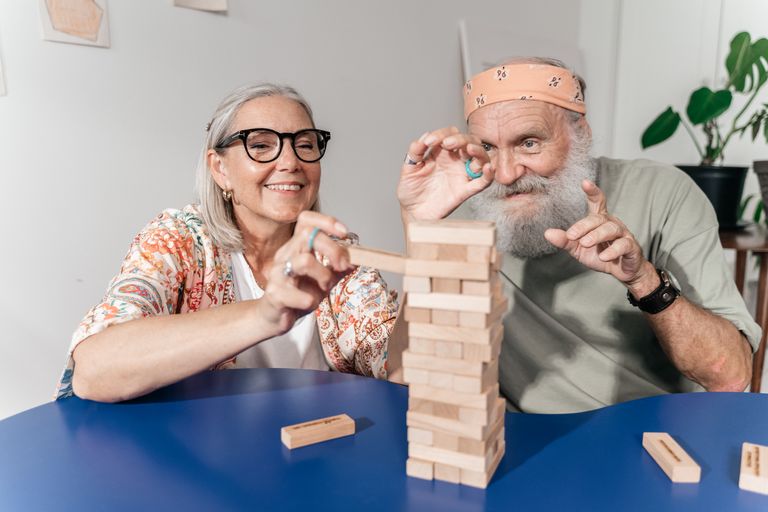
Game nights bring a unique blend of joy and connection that can greatly enhance the wellbeing of seniors. Engaging in board games and puzzles sharpens memory and problem-solving skills, leading to improved cognitive function. Regular cognitive engagement boosts cognitive reserve, which can help in delaying dementia onset. Additionally, incorporating gentle exercises during game nights can further promote physical activity and enhance overall well-being.
These nights create a relaxed atmosphere, fostering meaningful relationships and reducing feelings of isolation. Regular social interaction not only boosts mood but also promotes better mental and physical health.
Game nights foster connections and reduce isolation, enhancing mood and promoting overall mental and physical health.
Plus, the laughter and friendly competition release endorphins, providing stress relief and a sense of accomplishment. Games that involve movement can gently encourage physical activity, enhancing flexibility and balance.
Ultimately, game nights serve as an essential source of joy, connection, and cognitive engagement, enriching the lives of seniors in profound ways.
Frequently Asked Questions
How Often Should Seniors Play Memory Games for Maximum Benefit?
You should encourage seniors to play memory games three to four times a week for 30-60 minutes. Consistency is key; shorter, daily sessions can also boost cognitive engagement and overall well-being effectively.
Are There Specific Memory Games for Seniors With Hearing Impairments?
Yes, seniors with hearing impairments can enjoy visual-based games like jigsaw puzzles, bingo, and matching games. These activities boost memory while accommodating visual cues, ensuring everyone has fun and stays engaged without relying on sound.
What Materials Are Needed to Create DIY Memory Games?
You’ll need cardboard, paints, wooden disks, fabric, and a printer for DIY memory games. Gather scissors, glue, and stencils, too. These materials help you create engaging activities that foster connection and joy for everyone involved.
Can Memory Games Be Played Solo, or Are They Group Activities?
Yes, memory games can definitely be played solo or in groups. You can choose from various options, like puzzles or card games, depending on whether you want a personal challenge or a fun group activity.
How Do I Choose the Right Game for Different Cognitive Levels?
To choose the right game, assess cognitive levels first. Opt for simpler games like matching for lower abilities, while trivia suits higher levels. Always adapt complexity, ensuring everyone feels included and engaged in the activity.